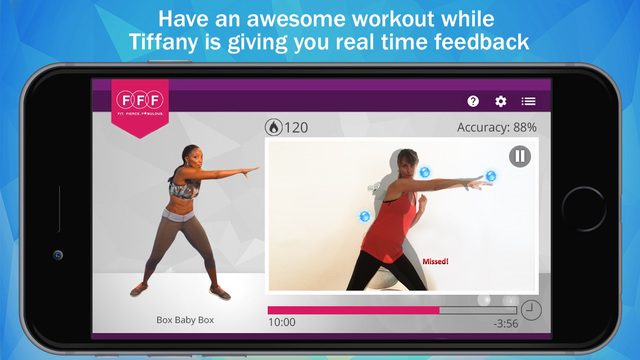
iOS app developers looking to maximize their referral channels can take advantage of Facebook’s “Native Share Dialog” that makes it as easy as inserting a single line of code to their existing apps to take advantage of this viral sharing channel.
Introduced early this week, Facebook announced the availability of this feature (which you can read about here). The AppAddictive team caught a glimpse of this technology during Facebook’s invite-only event for mobile app developers held last April.
What exactly is this “Native Share Dialog” and what does it mean for developers and their users? If a user is logged on in their native Facebook App, in this case the iOS version (Android to come soon), other apps (and websites) that would like to share items on their respective users’ timelines will no longer be required to log-in. This more or less mimics the ubiquity of the Like button embedded on other websites, making your Facebook experience seamless. The same applies for native mobile apps through the introduction of the “Native Share Dialog”
Facebook reported last May that they currently have over 751 million Active mobile users, and it’s quite natural for the company to introduce new innovations like these.
According to Facebook, “The Share Dialog offers a lightweight and consistent way to enable sharing from your apps. People now have the option to share activity from apps through this dialog without needing to login to Facebook first. This eliminates 1 – 3 extra steps required for login when sharing via the feed dialog.
The Share Dialog further improves upon the iOS6 share sheet by adding support for publishing Open Graph actions to make it easier for people to tell their stories on mobile. In addition, people can now tag friends and share where they are enabling them to share in a more meaningful and engaging way, while helping even more people connect with your app.”
Pretty neat isn’t it?
When we started AppAddictive, building tools for brand marketers as early as 2007, we took advantage of all these new features right after Facebook rolls them out. We’ve been fairly eager to try these things, and one of our apps eventually had a monthly active user base of 10 million users. And this was before AppAddictive became a “formal startup” – we were just doing this on weekends as a hobbyist!
If we were to do it again as a developer, we’d certainly build a mobile app and take advantage of Facebook’s mobile users.
Attribution remains to be a subject of interest in the world of Search and Social Marketing. Having discussed this topic with our partners, the verdict is still out on which framework the industry should adapt when faced with this question.
Recently, the fine folks from the Google Analytics team introduced a new report called “The Customer Journey to Online Purchase”. You can find out more about their findings here.
The Google report presents a pretty clear perspective on how a series of interactions with your brand can lead to an online purchase. We all know for a fact that it’s out there – we just need the right lens.
Google Search ads disproportianately benefit from “last click” attribution. In a typical setting, advertisers give full credit to customer purchases from Google Search and PPC Ads. While this situation gives the most obvious (if not lazy) answer to attribution, even Google acknowledges that the actual purchase is actually a byproduct of a unique “Customer Journey”. Traditional marketing describes “Customer Journey” as a series of interactions people have with a campaign through different mediums like telemarketing, Internet, branch and other forms of marketing communication. By seeing this as more of a journey, it takes into consideration the context of the customer’s feelings in each and every interaction.
In online marketing, channels (such as email, display ads, paid search ads, social, and direct visits to your website) influence the customer at different points in the path to purchase. Now this is where it gets interesting, Google Analytics’ n
ew “Customer Journey” tool allows a company to assign fractional attribution to each of these channels.
We’re working with two major channel types here: ASSISTING channels build awareness, consideration, and intent earlier in the customer journey or “purchase funnel. LAST INTERACTION channels act as the last point of contact prior to a purchase.
Since it’s the NBA playoff season, think of these interactions as a series of steps (from the inbound pass) culminating in an objective (scoring a basket). When Chris Bosh rebounds and passes the ball to Shane Battier who passes to Lebron James who passes to Dwayne Wade for a layup-dunk, Lebron James gets the full assist in regular statistics. If there were fractional attribution, Shane Battier might get credit for a fractional assist.
I played around with this new tool for a few minutes and I was quite impressed. For example, in the CPG industry, I found out that Social Channels are closer to the actual purchase than an Email channel. Another surprise is that in the Auto industry, Display Channels are closer to the actual purchase than Email or Social channels. It’s not really a one-size-fits-all approach. It’s up to you, as marketer or advertiser to decipher your ideal mix.
By Mike Onghai, CFA
One of my pastimes is analyzing banks on Facebook. I analyzed banks when I ran a hedge fund in an earlier life. So why not apply that to social?
Hedge fund pros love Wells Fargo’s business model. They don’t engage in proprietary trading and they’re good at consumer cross-selling. How about on Facebook?
Let’s compare December 1-15th against November 1-15th of 2012. Chase’s engagement (using People Talking About as the proxy) number grew nine fold from 12,418 (0.32%) to 137,084 (3.5%). (See the green rectangle in Figure 1).
Figure 2 below shows how Chase did it—they’re simply giving away money to charities.
People talk about what they’re passionate about, not about what you want to talk about. Oh, and the money part doesn’t hurt either—especially since the more you talk about it, the more your favorite charity moves up in the rankings.
What’s the ROI of this? Hard to say, but there’s certainly power in getting people to mention your brand name in a positive light multiple times per day. Free checking and automatic overdraft protection might be pretty cool, but are you telling your friends about it?
Chase promoted the 12-12-12 Concert for Sandy. Big hit in engagement—a one-two punch of celebrity content and charity power. The only thing better would be to somehow work in bacon, kittens, and babies.
We’re not saying that blindly increasing engagement is best, nor that a business should take advantage of sensitive situations to promote themselves. We are saying that you need to connect what your fans are passionate about
in a way that still aligns with your brand message.

Figure 2: Posts on Chase’s Community Giving Facebook Page
But what about Wells Fargo? They’re posting finance tips and saving advice for small business owners and consumers. See Figure 3 below.
Looking at the stats in terms of engagement, Chase’s achieved a 3.5% engagement rate on a fan base of 3.8 million whereas Wells achieved a less than 2% rate of engagement on a fan base of 470,000.
Generally, engagement is lower on larger bases but in this case, Chase's achieved a higher engagement on a larger base.

Figure 3: Posts on Wells Fargo’s Facebook Page
Key takeaways:
1. Your charitable causes activate passion, key to sharing. What are your fans passionate about?
2. Mixing celebrities and charitable causes can multiply your power. Do you sponsor a stadium or are active in the community? Amplify these connections. First Bank's page (https://www.facebook.com/efirstbank) has a few good examples of such amplification of content.
What do you think? Who is your favorite bank? Would you like to have a dashboard analysis drawn up for your bank? Tell us in the comments below.
Although this question may be debatable, here are three reasons why Community Management of your social media channels in the marketing mix would be better off if managed by experts outside of your organization. In the long run, it would be more effective and efficient to outsource your community management.
1. Community managers (and their agencies) live and breathe social media
If your job is not living and breathing social media 24/7, chances are you are not able to keep up with what’s happening on Facebook, Twitter, Google+, Pinterest, etc. While adding the odd tweet and keeping an eye on Facebook comments might be manageable, you might not have time to do a great deal more.
Creating content calendars that ensure that every post is optimized to create the maximum impact and ensuring that your Twitter account follows all the key influentials in your market may be enough to fill your day.
Also ask yourself if you are keeping up with the latest Facebook competition rules? Or working out how the Twitter API changes could impact your brand’s output? And what about other platforms – should you be focusing on Google+ this year or Pinterest?
Community managers will be up-to-date on all platforms, what they can offer and how they can potentially work best for your brand. It is their job after all. Why not let the experts worry about the finer details?
2. Community managers can offer a fresh perspective
Sometimes
working on one specific thing or brand can make things jaded after a while. Outsourcing your social media efforts will invite a fresh perspective to the table and stimulate discussion around the brand and how to make it stand out in the fast-changing social media sphere.
Your community manager will have worked on or read about other branded online campaigns. They know what has worked in the past, what could work in the future, and what could potentially be a social media disaster.
They will also be able to advise on and devise the social media strategy that is essential to ensure your brand flourishes online and offline.
3. Community managers are enthusiastic about what they do and will be backed up by a team
If you divide the community management duties between individuals in your company, chances are the actual management of the online entities end up falling through the cracks as other tasks take precedence.
Also, unless proper guidelines are set, your brand’s social voice and tone could end up being fragmented across the social media entities.
An agency can provide the important neutrality good community management requires and will have a team set to ensure your community management is kept consistent regardless of summer holidays or staff turnover. They have also actively pursued this career, so will be eager to do it well.
Finally let’s not forget one very important thing. If you outsource your community management then you can be assured that your Facebook pages will always be updated and that someone is responding to questions on Twitter and other social networks in a timely and coordinated manner.
Your brand won’t be joining the thousands of others whose Facebook and Twitter accounts lay dormant and are an embarrassment to the company and the staff that were supposed to populate them.
Two Chop founder Mo Lam and AppAddictive CEO Mike Onghai were featured on an episode of Elevator Pitch, hosted
by Alan Meckler, pitching their gamification venture, Two Chop. If you run a blog or other content oriented website containing text, music or images, Two Chop can take that content and turn it into a game in minutes.
Word-of-Mouth (WOM) is the primary factor behind 20% to 50% of all purchasing decisions. Its influence is greatest when consumers are buying a product for the first time or when products are relatively expensive (factors that tend to make people conduct more research, seek more opinions, and deliberate longer than they otherwise would). And its influence will probably grow because the digital revolution has amplified and accelerated its reach to the point where word of mouth is no longer an act of intimate, one-on-one communication. Today, it also operates on a one-to-many basis: that is, product reviews are posted online and opinions disseminated through social networks. Some customers even create Web sites or blogs to praise or punish brands.
Very interrelated to WOM is customer loyalty. Although the need to provide an after-sales experience that inspires loyalty and therefore repeat purchases isn’t new, not all loyalty is equal in today’s increasingly competitive, complex world. There are 2 types of loyalty: Active loyalists, who not only stick with it but also recommend it; Passive loyalists, who choose to stick to the brand either because of complacency or confusion caused by too many choices, and stay with a brand without being committed to it. Despite their claims of loyalty, passive consumers are open to messages from competitors who give them a reason to switch.
Some key concepts related to WOM
3 Main Classifications:
Experiential
WOM is the most common and powerful form, typically accounting for 50% to 80% of word-of-mouth activity in any given product category. It results from a consumer’s direct experience with a product or service, largely when that experience deviates from what’s expected. (Consumers rarely complain about or praise a company when they receive what they expect.) Complaints when airlines lose luggage are a classic example of experiential WOM, which adversely affects brand sentiment and, ultimately, equity, reducing both receptiveness to traditional marketing and the effect of positive WOM from othe
r sources. Positive WOM, on the other hand, can generate a tailwind for a product or service.
Consequential
Marketing activities also can trigger WOM. The most common is what we call consequential WOM, which occurs when consumers directly exposed to traditional marketing campaigns pass on messages about them or brands they publicize. The impact of those messages on consumers is often stronger than the direct effect of advertisements, because marketing campaigns that trigger positive WOM have comparatively higher campaign reach and influence. Marketers need to consider both the direct and the pass-on effects of WOM when determining the message and media mix that maximizes the return on their investments.
Intentional
A less common form of WOM is intentional—for example, when marketers use celebrity endorsements to trigger positive buzz for product launches. Few companies invest in generating intentional WOM, partly because its effects are difficult to measure and because many marketers are unsure if they can successfully execute intentional WOM campaigns.
A starting point has been to count the number of recommendations and dissuasions for a given product. There’s an appealing power and simplicity to this approach, but also a challenge: it’s difficult for marketers to account for variability in the power of different kinds of WOM messages. After all, a consumer is significantly more likely to buy a product as a result of a recommendation made by a family member than by a stranger. These two kinds of recommendations constitute a single message, yet the difference in their impact on the receiver’s behavior is immense. In fact, our research shows that a high-impact recommendation, from a trusted friend conveying a relevant message, for example, is up to 50X more likely to trigger a purchase than is a low-impact recommendation.
In a recent SMB Digital Marketing 2012 held in Chicago sponsored by BIA/Kelsey SMB Digital Conference, one of the major headlines is that Social Loyalty is the Next Big Marketing Strategy of 2013. Social Loyalty Apps such as http://socialloyaltyapps.com/ convert “likes” into “leads” and leads into loyal customers. The chart below shows where small business owners are putting in their marketing budget.
According to eMarketer, the new report, “Social Loyalty: From Rewards to a Rewarding Customer Experience,” analyzes findings from dozens of third-party research providers and interviews with industry executives. Here are some of the best practices for improving social loyalty.
Why? Because many traditional loyalty programs are not highly effective, eMarketer notes. While loyalty programs have been popular in the US for years—with the average
American consumer belonging to 18 loyalty programs according to loyalty marketing publisher COLLOQUY—it is not clear how many of these consumers are actually active.
eMarketer further notes that points, coupons and freebies are great for grabbing initial attention. But in the long run these promotions can’t make up for a lackluster customer experience. However, through the use of social media, retailers and brands can identify and interact with the most profitable internet users. And for the first time ever, social networks such as Facebook makes it easier for businesses to acquire new customers through social loyalty programs. Why? Loyalty can be won through encouraging word-of-mouth and creating advocates or evangelists, by raising a user’s social status, by surprising and entertaining shoppers in unexpected ways and also by listening to customers’ needs and suggestions and responding in a mutually beneficial fashion. Brands that most often succeed typically encourage sharing, raise customers’ social status, develop highly entertaining loyalty programs, and listen and respond to feedback quickly. Social loyalty programs provide brands with an unprecedented amount of customer data, both online and offline.
For companies looking to drive business online, lots of time and money is invested in lead generation. But what do you do when the leads start flowing in?
Though leads follow up may sometimes look daunting, successfully following up on a lead and starting the process that will take it to a sale doesn't have to be a trying and disappointing process.
Here are seven tips for following up on leads effectively.
1. Strike while the iron is hot.
In many cases, a lead is an asset that depreciates in value very, very quickly. Thus, it's worth trying to respond to qualified leads as soon as humanly possible. This is because your response time will often determine whether you close a sale or lose a sale you could have easily closed.
COMMON SENSE: it's important to read a lead so that you know who you're dealing with and what your opportunity may be. But the FACT: this doesn't always happen.
To avoid looking unprepared or taking things for granted, it is a tremendous help to create a checklist that your inbound marketers should use as part of the lead follow-up process.
3. Have the right (and preferably same) person respond and follow through from the get go to establish rapport.
To make the most of a lead, ensure that the person best capable of following up on it is the same person who responds. While new prospects may necessarily have to
deal with several people throughout the sales cycle, it is often desirable to ensure that their first point of contact is someone they can start to build a rapport, if not a relationship, with.
4. Don't be afraid to pick up the phone
Thanks to technology, phone calls are more and more infrequent for many individuals, especially to younger members of the workforce. However, the phone is still a powerful sales tool and, if your lead contains a phone number, make a habit of picking up the phone and dialing it.
5. Get on the same page
When speaking with a prospect, walk before you run. Even if your lead came with a lot of detail, it's important to confirm that you have a good understanding of what the prospect needs and haven't made any assumptions that could unnecessarily limit your opportunity, or ruin it altogether.
6. Set expectations and timeframes
In every aspect of sales and business cycles, expectations are everything and it's never too early to set them. If an initial conversation with a lead confirms that there's an opportunity, take control. Once you're on the same page with the customer and understand his/her needs, you should at a minimum lay out what you think the sales cycle will look like. This includes proposing dates for key milestones.
7. Always respond
Not all leads are created equal. Some, unfortunately, are less-than-desirable for a variety of reasons. Nevertheless, assuming that the individual who submitted the lead is a real person, a response should always be provided no matter what. Not only can this help maintain your reputation in the marketplace, it also ensures that you will be remembered for future opportunities that may be a better fit.
First a disclaimer: Especially in social media, there are no such things as rules in conversion rate optimization. What works in one situation may not be the same for another. Nevertheless, there are a number of hardwired human traits and behavioral patterns understood by psychologists, behavioral economists and other social scientists that we can use to increase our conversions.
Here are 12 brands identified by Econsultancy that used such principles and have worked. You might want to test them out yourself for your own brand and explore.
Social Proof
One of the most effective things you can bring to your site to increase the confidence of buyers is 'social proof'. Social proof is the phenomena where people tend to believe that the decision and actions of others reflect the correct behavior in a specific situation. So, we have to create an experience which convinces our visitors they’re not the only person making this decision.
Basecamp
In this design we see a subtle mention of the sheer number of other people who have made the same purchasing decision that the visitor is considering.
Raven SEO Tools
One of the most common ways to integrate social proof into your site is by including testimonials into your site, especially if you can include a picture of the person providing the social proof. Software as a Service (SaaS) companies are the kings of this. But it’s a sensible addition to most B2B sites and can also work well in B2C environments.
There’s a huge number of clever CRO techniques in place on this page but we want to highlight one of the easiest ways to implement social proof into your site, using the off-the-shelf Facebook Like button/widget. It really simply shows you the profile pictures of other people who’ve liked that page on Facebook, also prioritizing those who are connected the to the visitor of the site.
It is not just social proof, but personalised social proof. Actually it’s even better than that. It’s automated personalised social proof.
Groupon
Yes Groupon. It might have been getting a lot of stick recently but it, more than nearly every other major internet business, has a deep understanding of human behavior. Here it illustrates how they’ve built social proof into the very DNA of its business.
By showing how many other people have bought the same offer, Groupon hopes to persuade the visitor to do the same, and place an order.
Loss Aversion
The disutility of giving up an object is greater than the utility associated with acquiring it. This is known an Loss Aversion. ‘Disutility’ simply means that human tendency prefers not to lose something more than we love to gain something. Sometimes this is about a subtle re-framing of your copy to concentrate on loss rather than gain. We need to ask ourselves 'How can we make visitors think they’d be losing something if they don’t buy?'.
LateRooms
Many travel website are particularly good at communicating loss aversion. A good example is LateRooms. It makes it clear what you would lose if you don’t book now. This serves to instantly increase urgency.
Qwertee
Qwertee has built an understanding of human behavior right into its business model. Its t-shirts are only available for 48 hours and after the first 24 the price increases. Every time you visit the site there’s a huge ticking clock showing exactly what you’re going to miss out on if you don’t purchase soon.
Beat Generals – Fl Studio Video Tutorials & Drums – This Converts!!
ww.appaddictive.com/690/12-conversion-rate-optimization-cro-tips-based-on-human-psychology-and-behavioral-economics/qwertee-2/” rel=”attachment wp-att-707″>
Amazon
Amazon is the king of using cognitive biases to increase conversion rates. One particular example where it uses loss aversion is for its 'Prime' customers. Prime users are a subset of their most frequent customers who have paid upfront fees to have access to next day delivery by default. If you’re a signed-in Prime customer, every product you visit that has next day delivery reminds you how long you’ve got before that day’s cut-off point. 
Argos
It’s not just online giants like Amazon making use of our innate loss aversion to increase purchases. High street retailer Argos taps into our aversion to loss to drive footfall to its shops using this clever lightbox.
Anchoring
One of my favourite cognitive biases that influences the way behave, is known as anchoring. It is the tendency to rely too heavily – or 'anchor' – on a past reference or on one trait or piece of information when making decisions. These anchors can often be numerical. Our challenge is to ask 'How can I reference an ‘anchor’ that influences visitors to my site?'.
Hotels.com
One of the oldest anchoring tricks in the book is what the price was reduced from. Cross-hatched higher prices showing the available discount is a simple way to anchor the price of an item and make it seem better value.
Mailchimp
SaaS companies like MailChimp often make use of a clever anchoring technique that more businesses should be wise to try and use. You’ll notice they have one high price that’s much higher than all the other price points. This maybe be because it’s a popular option. However many anchoring experiments have found introducing one higher price point can lead to people spending more in total even if nobody chooses that option.
This concept is worth repeating because it is a bit counter-intuitive: Adding an extra expensive option to your page can increase the average order value of the page even if nobody selects that option. This is because it makes your other expensive options seem less expensive. This is one that’s well worth testing.
There’s also a case of possible anchoring taking place on the homepage of Broadband.co.uk, where the BT offer is significantly more expensive than the other options. That's because the package is very different to the others. If we believe in the principle of anchoring, this may be increasing the value of the traffic to this page by encouraging them to assess the relative value of the other options differently.
Wiggle
Adding related products to a page can be a great way to increase the number of items people add to a basket. There’s also a possibility that the selection of these products might also have an anchoring influence. We don’t expect too many retailers bear price anchoring in mind with their related product algorithm, but it’s something you would expect some retailers to have tested.
As we noted at the beginning of this article, we don’t always know in every case that these changes have been implemented to increase conversion rates. However, if we understand human behavior and some of our cognitive biases, they would certainly seem worthy efforts to try.